Position : Home > News

How to Choose the Right Internal Door Range for Whole-House and Multi-Plot Projects

Choosing one internal door is easy. Choosing an internal door specification that works across 50, 100, or even hundreds of openings is a completely different challenge.
For a single room, it is tempting to focus on the design, check the dimensions, compare the price and place the order. But for a whole-house renovation, multi-plot development, HMO conversion, apartment project or premium refurbishment, the door becomes part of a much larger specification.
At project scale, an internal door has to do more than look right.
It needs to fit the design language of the property, perform consistently, work with different room requirements, meet applicable project regulations, remain available in the required sizes and configurations, and arrive in sufficient quantities without creating unnecessary installation or replacement costs.
This is where many door purchasing decisions become complicated.
A door that looks excellent in a showroom may not be the easiest door to specify across an entire development. A supplier may offer a good standard product but have limited customization options. A door range may look consistent at first glance but have no matching glazed or flame-rated version when the project specification becomes more detailed.
For developers, builders, contractors and distributors, the better question is therefore not simply:
“Which internal door looks best?”
It is:
“Which internal door range can deliver the right combination of design, performance, consistency, customization and supply capacity throughout the project?”
That distinction matters.
A well-planned internal door range can simplify procurement, reduce unnecessary product variations, create a more consistent finished interior and make it easier to manage future repeat orders. A poorly planned specification can create problems that only become visible once production or installation has already started.
In this guide, we look at the key considerations when selecting internal doors for whole-home renovations, multi-plot developments and other construction projects.


Why Choosing a Complete Internal Door Range Matters

One of the most common mistakes on a larger project is choosing doors individually rather than specifying a complete range.
It can happen quite naturally.
A glazed door looks attractive between the kitchen and living area. A Shaker door seems appropriate for the bedrooms. A contemporary flush door appears to work well downstairs. Another design is selected because it looks good in a sample room.
There is nothing inherently wrong with any of those choices.
The problem is what happens when they are repeated throughout the property.
Internal doors are among the most frequently repeated visual elements inside a building. They appear along hallways, bedrooms, landings, living spaces and room transitions. Because they are repeated so often, differences in panel design, proportions, finish and detailing can become much more noticeable than expected.
A coordinated door range solves part of this problem.
Instead of selecting unrelated products for different rooms, a complete range allows the project team to choose different configurations while maintaining the same overall design language.
Depending on the project, this may include:
  • Solid internal doors
  • Matching glazed internal doors
  • Flame-rated door options
  • Pocket doors
  • Sliding internal doors
  • Different door widths and heights
  • Primed, unfinished or pre-finished surfaces
  • Different core constructions
  • Custom door sizes
  • Matching frames and related components
The advantage is not simply having more products to choose from.
The real advantage is having more project flexibility without losing specification control.
For a builder, this can make installation planning easier. For a developer, it can support consistency across different plots. For a distributor, it can create a more useful product portfolio that covers several customer requirements without relying on completely unrelated door ranges.
A complete door range is therefore more than a collection of products.
It is a tool for managing consistency at scale.

Start With the Property, Not the Door

Another common mistake is deciding on the door style before understanding what the property itself requires.
Before comparing panel layouts, colours or finishes, consider the building.
What type of property is it?
Who is the end user?
What is the architectural style?
What level of finish is expected?
How many plots or units are involved?
Are there different phases of construction?
What performance requirements need to be considered?
A period terrace renovation may call for a more traditional profile and balanced detailing. A contemporary extension may work better with clean lines and a minimalist design. A multi-plot residential development may require a modern but broadly appealing style that will remain commercially attractive without becoming too dependent on a short-lived trend.
The right internal door is therefore rarely selected in isolation.
It should respond to the architecture, interior scheme, property positioning and intended end user.
For example, a project may require doors that provide:Broad appeal for residential resale
  • Warmth within a minimalist interior
  • Stronger detailing for heritage-inspired properties
  • Cleaner geometry for modern developments
  • Glazed options where natural light needs to flow between spaces
  • Solid doors where privacy is more important
  • Flame-rated configurations where required by the project
Defining this direction early makes the rest of the specification much easier.
Instead of asking, “Which door should we buy?”, the project team can ask a more useful question:
“Which door range best supports the way this property is designed, built and marketed?”What Type of Internal Doors Are Best for a Whole-House Renovation?
There is no universal answer because every renovation has different architectural and functional requirements.
However, styles that are versatile, repeatable and unlikely to become visually dated quickly are often easier to use across an entire property.
Shaker doors, modern panel doors, flush doors and understated wood-effect or oak-style doors can all work well in this context. Their relatively adaptable designs allow them to be used in bedrooms, living spaces, hallways and other areas without making each room feel like it belongs to a different project.
Panelled internal doors remain particularly popular because they can work across both traditional and contemporary interiors.
For project buyers, however, appearance should only be the first filter.
The more important question is whether the selected design can be supplied in the configurations required by the project.
A visually attractive door that cannot be produced in the required sizes, finishes or performance specifications can create procurement problems later.
That is why design flexibility and manufacturing capability should be considered together.

Think in Terms of Repeatability

A door can look perfect in a product photograph.
It can also look perfect in a showroom.
But project specification requires a much more demanding test:
Can the same design be repeated successfully throughout the entire project?
Consider how the door will look:
  • Along a hallway
  • On an upstairs landing
  • Across multiple bedrooms
  • Next to different flooring and skirting
  • Beside different wall colours
  • In both naturally lit and darker spaces
  • Across several houses or apartments
  • Across different production batches
This is where a good internal door specification separates itself from a good-looking individual product.
Some designs have a strong visual impact but become overwhelming when repeated dozens of times. Others have enough character to create a finished look while remaining sufficiently restrained for repeated use.
For multi-unit projects, this balance is particularly important.
The show home is only one part of the project. The same specification may eventually appear across dozens of homes, each with slightly different lighting, furniture and finishing details.
A successful door range should therefore look convincing not only in the first property, but also in the twentieth.
Repeatability is one of the most important characteristics of a project-ready internal door.

Why Range Depth Matters More Than Most Buyers Expect

A real construction project rarely consists entirely of standard solid doors.
Different areas require different solutions.
You may need glazed doors between living and circulation spaces, solid doors for bedrooms, fire-rated doors in specified locations and pocket or sliding doors where available floor space is limited.
There may also be openings that require non-standard dimensions.
This is where the depth of the manufacturer's product range becomes important.
Before committing to a large order, project buyers should ask:

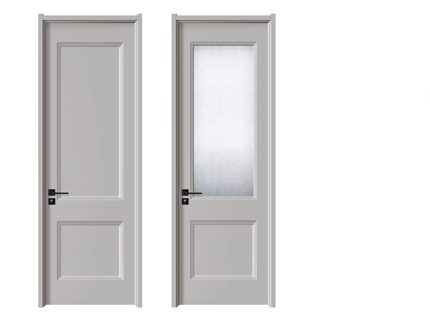
Is there a matching glazed version?

A glazed option should maintain the overall design language of the solid door rather than looking like an unrelated product.

Are flame-rated versions available?

Where the project specification requires fire-resistant doors, the availability of suitable configurations should be confirmed before finalizing the door range.

Are different sizes available?

Renovation and construction projects rarely have perfectly identical openings. A manufacturer with genuine customization capability can provide greater flexibility when standard dimensions are not sufficient.

Can the finish remain consistent?

If solid, glazed and flame-rated versions are produced with noticeably different finishes, the visual consistency of the project can suffer.

Can the supplier reproduce the same specification later?

This is particularly important for phased developments and replacement requirements.
A strong answer to these questions makes the door range considerably more useful.
If the answer is no, the project may eventually be forced to introduce alternative products, creating exactly the inconsistency that the original specification was intended to prevent.

Door Construction Matters as Much as Door Appearance

When buyers compare internal doors, the surface finish is usually the first thing they notice.
The internal construction is much harder to see—but it can have a significant effect on how the door performs.
Depending on the construction, factors such as the following can be affected:
  • Door weight
  • Dimensional stability
  • Acoustic performance
  • Durability
  • Thermal performance
  • Hardware compatibility
  • Installation requirements
  • Long-term maintenance
For a single residential customer, these differences may seem relatively minor.
For a developer or contractor purchasing hundreds of doors, they become much more significant.
A small dimensional or quality issue repeated across a large order can create additional site labour, installation adjustments, replacement requirements and customer complaints.
This is why project procurement should look beyond the surface.
Ask the manufacturer how the door is constructed, what materials are used, how dimensions are controlled and how finished products are inspected before shipment.
A reliable internal door specification should be based on both appearance and manufacturing consistency.

Custom Internal Doors: Why Factory Capability Matters

Customization is often described as a design advantage.
For construction projects, it is also a procurement advantage.
Existing buildings can have irregular openings. Architects may specify particular dimensions or finishes. Developers may want a consistent design across different room types. Distributors may need products adapted to specific market requirements.
This is where direct access to a manufacturer's production capability becomes valuable.
Before placing a bulk order, ask:
  • Can the door size be customized?
  • Can the design be modified?
  • Can different sizes be produced within the same project?
  • Can solid and glazed versions be coordinated?
  • Can different finishes be supplied?
  • Can the manufacturer follow project-specific drawings or specifications?
  • Can customized products be produced in commercial quantities?
  • Can the same specification be reproduced for future orders?
A supplier that only sells standard catalogue products may have limited flexibility.
A manufacturer with established factory customization capabilities can potentially adapt production around the project's requirements.
For builders and engineering contractors, this can make a significant difference when standard catalogue dimensions do not perfectly match the construction drawings.

Large-Order Capacity Is Part of Product Quality

There is another issue that is easy to overlook:
Can the supplier actually manufacture the quantity you need without sacrificing consistency?
A factory may produce an excellent sample.
That does not automatically mean it can reproduce the same product reliably across a large project.
For bulk internal door procurement, buyers should consider:
  • Production capacity
  • Production lead time
  • Raw-material availability
  • Quality-control procedures
  • Custom-order capability
  • Batch consistency
  • Packaging and protection
  • Loading and shipping arrangements
  • Replacement-order capability
  • Ability to support repeat project orders
This is particularly important for distributors.
A distributor does not only need a good product for the first order. They need a supplier capable of supporting future orders with comparable specifications and quality.
For builders and developers, the concern is slightly different.
The question is whether production can keep pace with the construction schedule.
A delay in internal doors may sound relatively small compared with major structural works, but once a project reaches the finishing stage, missing doors can directly affect installation sequencing and handover.
Production capacity is therefore part of the specification—not a separate issue.

Batch-to-Batch Consistency Should Be Checked Before Ordering

Multi-plot developments often require more than one production batch.
This creates a practical question:
Will the doors produced later still match the doors supplied earlier?
Variations in dimensions, surface texture, colour, panel proportions or finishing can become obvious when products are installed throughout the same development.
A professional manufacturing process should therefore control key variables throughout production.
  • For large orders, buyers should pay attention to:
  • Dimensional accuracy
  • Surface finish
  • Colour consistency
  • Panel geometry
  • Edge treatment
  • Glazing configuration
  • Hardware preparation
  • Packaging protection
It is also useful to establish how the manufacturer handles repeat orders.
If a contractor needs another batch several months later, can the supplier reproduce the original specification?
This matters for phased construction, replacement doors and future projects.
For a manufacturer, consistency is not simply a quality-control slogan.
It is what allows a distributor or contractor to confidently place the next order.

Consider Total Project Cost, Not Just Unit Price

Price is obviously important in any construction project.
But the cheapest door on the quotation is not necessarily the lowest-cost option once the entire project is considered.
The real project cost can also include:
  • Installation labour
  • Site adjustments
  • Damaged products
  • Incorrect dimensions
  • Replacement doors
  • Delayed deliveries
  • Product substitutions
  • Additional finishing work
  • After-sales service
Imagine a small installation problem occurring on one door.
It may be manageable.
Now multiply that problem across 10,000 or 50,000 doors.
The financial impact can change dramatically.
This is why professional procurement teams should evaluate total project cost, not simply the purchase price per door.
A manufacturer that provides consistent dimensions, reliable production and suitable packaging may help reduce costs elsewhere in the project.
The objective is not simply to buy a cheaper door.
It is to achieve the right balance between unit price, product quality, installation efficiency, delivery reliability and long-term project performance.

Build a Clear Internal Door Specification Before Production

Once the door range has been selected, the next step is to turn the design decision into a controlled specification.
This is especially important for larger orders.
A project door schedule might define:
  • Main door style: Standard solid internal door
  • Secondary configuration: Matching glazed door
  • Fire-rated configuration: As required by the project specification
  • Space-saving option: Pocket or sliding door where appropriate
  • Finish: Approved project finish
  • Sizes: Standard sizes plus approved custom dimensions
  • Quantity: Confirmed by plot or room schedule
  • Quality requirements: Agreed before mass production
This level of detail reduces ambiguity between the project team and the manufacturer.
It also helps prevent a common problem in bulk procurement: the product ordered at the beginning of a project gradually becoming different from the product supplied later.
The more detailed the specification, the easier it is for everyone to work from the same reference.

What Should Builders and Distributors Ask an Internal Door Manufacturer?

Before placing a large internal door order, it is worth asking the manufacturer a few practical questions.

Product and design

  • Can you provide solid and matching glazed doors?
  • What door styles are available?
  • Are different finishes available?
  • Can the design be customized?

Size and customization

  • Can you manufacture non-standard dimensions?
  • What is the available size range?
  • Can different sizes be included in one project order?

Project supply

  • What is your production capacity?
  • What is the typical lead time for bulk orders?
  • Can you support phased deliveries?
  • Can you handle large engineering or construction orders?

Quality control

  • How are door dimensions checked?
  • How is surface quality inspected?
  • How do you control consistency between production batches?
  • How are doors packaged for transportation?

Long-term supply

  • Can you reproduce the same specification for repeat orders?
  • How do you handle replacement doors?
  • Can you maintain consistent finishes and dimensions over future orders?
These questions help move the purchasing conversation away from catalogue appearance and toward actual project performance.

Why Factory-Direct Supply Can Make a Difference

For distributors, developers and construction contractors, working directly with a manufacturer can provide another advantage: clearer communication between the project requirements and the production process.
Instead of passing customization requirements through several layers of suppliers, a factory-direct relationship can make it easier to discuss:
  • Door specifications
  • Custom dimensions
  • Finishes
  • Production quantities
  • Quality requirements
  • Packaging
  • Delivery schedules
  • Repeat orders
This is particularly valuable when a project involves customized products or large quantities.
The closer the communication is to the production line, the easier it can be to identify potential issues before mass production begins.
For project buyers, the goal is not simply to find a company that sells internal doors.
It is to find a manufacturing partner capable of understanding the specification and reproducing it consistently.

The Right Internal Door Range Is More Than a Design Choice

For a single room, choosing an internal door can be primarily about appearance.
For a whole-house renovation or multi-plot development, the decision is much broader.
The right internal door range needs to combine:
Design consistency
Functional performance
Range depth
Customization capability
Manufacturing capacity
Quality control
Delivery reliability
Project cost control
This is why developers, builders and distributors should evaluate an internal door manufacturer from more than a product catalogue.
Look at the complete supply capability.
Can the factory produce the required quantity?
Can it customize the dimensions?
Can it maintain consistent quality?
Can it provide matching solid, glazed and project-specific options?
Can it reproduce the same specification for future orders?
And can it support the project from initial sample approval through bulk production and final delivery?
These questions become increasingly important as project size increases.
A door may be a relatively small component of a building, but when the same door is repeated across an entire development, a small difference in quality, dimensions or supply reliability can become a significant project issue.
The best internal door specification is therefore not simply the door that looks right in the sample room. It is the door range that continues to work when the project gets bigger, more complex and more demanding.
Planning a Bulk Internal Door or Construction Project?
If you are a distributor, builder, developer or project contractor sourcing internal doors in volume, the specification should be discussed before production begins.
Share your required door styles, sizes, quantities, finishes or project drawings with an experienced internal door manufacturer. A factory with customization and bulk-production capabilities can help evaluate the requirements and develop a door specification that fits the project's design, quantity and delivery needs.
The right door range can simplify procurement. The right manufacturing partner can make that specification repeatable at scale.
You may also like these products
WPC Door
WPC Door
WPC Door Skin
WPC Door Skin
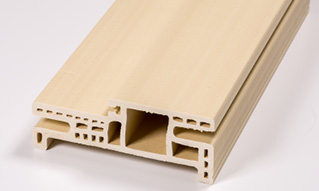
WPC Door Frame
WPC Door Frame
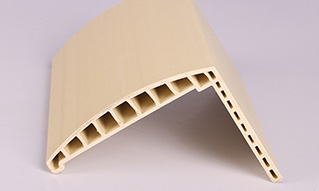
WPC Door Architrave
WPC Door Architrave